

WIC Helps Babies Grow Healthy & Strong
WIC Helps Babies Grow Healthy & Strong
As babies grow from infants to toddlers they graduate dozens of baby milestones, from eating purees, finger foods and walking. Your baby’s pediatrician can help you learn if your baby is on track. Being aware of major developments can ensure your tot is staying on track. Texas WIC can also help your baby stay on track.
Bringing a newborn home from the hospital can be overwhelming. There is so much to learn and process – how to feed, making sure they are safe and loved, learning to decode their baby language. As you get to know your baby and all the traits that make them uniquely them, you will also start picking up on your baby’s developments. It’s something you can observe and watch from Day 1. It’s also one of the biggest joys of being a parent, watching your baby grow and learn.
There are endless resources online about baby milestones, but don’t get overwhelmed and remember they are just a guide. Your baby’s doctors are the ultimate resource. Plus, any resource you use (online, book, etc.) are only tools to help you ask the right questions to your doctor.
One great online resource is, Texas WIC. Their experts have outlined some of the milestone highlights of a baby’s first year online.
INFANT DEVELOPMENT
When you first bring your baby home, most of your attention will be focused on your baby’s eating, sleeping and baby communication (or crying).
You will start to notice signs that your baby is hungry, including when they might be crying or sucking on their tiny hands. They may also try to nuzzle you to get fed. You will learn the signs your baby is trying to tell you as you get to know them.
Texas WIC, a free program that guides mothers in providing healthy habits for their children, offers a lot of tools to help mothers feed their children, including these tips online. The program helps mothers provide healthy nutrition for their babies on the WIC program.
By the end of the first month, you may notice your baby keeps their hands in tight fists, can move head side-to-side while on their tummy and can recognize your voice.
2-6 MONTHS
By the time your baby is at the end of two months, your baby will likely be smiling at faces, can calm themselves with hand sucking and can hold their head up when on their tummy, according to the CDC. Their experts also recommend talking to your doctor if your baby doesn’t respond to loud sounds or can’t hold their head up.
At 4 months, your baby will likely be mimicking movements and faces, begin to babble and may be able to roll from tummy to back, according to the CDC milestone markers.
At 6 months, they may be responding to their own name, bringing objects to their mouth and roll over in both directions, according to the CDC milestone guide.
Texas WIC recommends on their website to contact Early Childhood Intervention Services if you are still concerned about your child’s development after talking to their physician. ECIS is a statewide program. You can learn more about their programs online.
If you are interested in joining Texas WIC to help your baby grow healthy and strong, you can apply online.
Lone Star Family Market is an Austin-area grocery store chain the specializes in providing an easy WIC-grocery shopping experience. Find a location near you.

Use WIC Foods to Make Menu Plan
Save Time, Money by Planning Your Menus
Wouldn’t it be nice if you only had to think about what you were going to make for dinner once a week? You picked up all your WIC food. Now what are you going to make?
Between changing diapers and making sure your tot doesn’t run headfirst into danger, finding time to get a healthy meal on the table can be a real struggle. You might find yourself opening the fridge at crunch time, searching for anything you can throw together that your family will eat.
We all know eating healthy is important, but dinnertime can creep up on you every single day. We have all been there. Give meal planning a try.
It can sound intimidating, but it can make feeding your family much easier. You don’t have to spend an entire day in the kitchen or even buy up lots of ingredients in advance. It just takes a little planning, and you can save you lots of time and money.
Think of meal planning as a tool to maximize your ingredients in a way that will also help you make the most of your time. It just means you have to think ahead.
MAKE A PLAN, KEEP IT SIMPLE
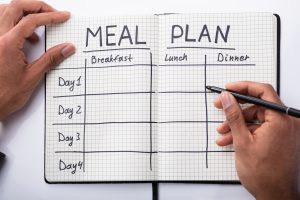
Use the WIC foods in your kitchen to come up with a meal plan. Our tips will show you how.
Pick a day once a week to write out a menu. Use whatever method you prefer, paper and pen, or even your smartphone. You can make your plan anytime when you have a little extra time (like after the kids go to bed). This process won’t take long, and as you get familiar with the steps you will be planning with ease.
First, survey the ingredients you already have on hand. Search your pantry, refrigerator and freezer.
Use the ingredients you already have to come up with several dinner ideas you think your family would love. Next, look for the ingredients the recipes might have in common. No reason to cook the same thing twice. Cook once even if it means you have to cook more of the ingredient. For example, if you have two recipes with rice, cook enough for both meals. Store the cooked rice in the refrigerator until it is needed for the second recipe. In some cases, it might make more sense to freeze the extra ingredient you cooked.
Leftover roasted vegetables can be eaten as a side one night and served on top of a whole grain rice bowl the next night. Leftover beans can also be used in a rice bowl. Roasted vegetables such as asparagus, broccoli, onions and peppers are also great in an omelet the next day.
If you have extra veggies sitting in your fridge at the end of the week, don’t let them waste. Toss them in a non-stick skillet to create a quick stir-fry.
HEALTH COMES FIRST WITH WIC FOOD
When picking your recipes and ingredients make sure you are selecting healthy options. There are many tools online. One of our favorite sites is the USDA’s choosemyplate.gov.
The website is a great tool to have at your fingertips when searching for tips to make a menu. On the site, you will even find pointers for eating on a budget. There are also some great recipes the entire family will love. Visit choosemyplate.gov/myplatekitchen/recipes to find a few to try this week.
The USDA even has recommendations on how to plan meals. They suggest being mindful of using ingredients you already have, create a recipe list, think about your schedule for the week and plan to use leftovers. Use their printable calendar to help plan your meals.
WIC FOOD, CLASSES
Texas WIC also offers guidance online. They even have online classes and explore topics such as “Cooking with Fruits and Vegetables” and courses for “Feeding Tips for Children 1-2 Years Old” and another course for 2-5 year olds. They also have a course on “Food Safety at Home” that could come in handy.
When searching for healthy recipes, you can also browse a collection provided by Texas WIC.
The program is a helpful resource for expecting mothers and mothers of children up to age 5 years old. The program is 100% free to those that qualify. It’s aimed to help pregnant and breastfeeding mothers get a healthy start for their infants and children up to age five.
WIC also helps you stretch your food budget. WIC recipients can shop for free WIC food such as fresh fruit and vegetables, milk, and even specialty formula. To find out if you qualify, visit a WIC clinic or apply online.
RECIPES USING WIC FOOD
To get you started, here are a few budget-friendly recipes from the USDA’s ChooseMyPlate.gov you are sure to love. These recipes, using WIC food, are perfect to use in your meal planning this week.
The following recipe is credited to: Author, USDA Center for Nutrition Policy and Promotion. Black Bean Burgers. MyPlate Kitchen.
Black Bean Burgers
- Makes: 4 Servings
- Prep Time: 30 minutes
- Cook Time: 30 minutes
Black beans and cooked rice are used as the base of these delicious burgers. Flavored with scallions, garlic and spices, these are sure to please the whole family.
- 1 can 15.5 ounce low-sodium black beans (drained and rinsed with cold water)
- 1 large egg
- 1/2 cup cooked brown rice
- 2 scallions (green and white minced about 1/4 cup)
- 2 tablespoons Chopped fresh cilantro (or basil leaves or a combination)
- 1 clove garlic (peeled and minced)
- 1/4 teaspoon dried oregano or basil
- 1 teaspoon vegetable oil
- 1/2 teaspoon salt
- 1/2 teaspoon black pepper
- 4 whole-wheat buns
Add beans to a bowl and mash with a fork until chunky. Then add the egg and mix well. Add precooked rice, scallions, garlic and oregano, salt and pepper and mix until well combined. Divide the mixture into 4 portions and form each portion into a patty about ¾ to 1 inch thick. Place a large skillet on the stove on high heat. When the skillet is hot, add oil. Add burgers and cook 4 to 5 minutes per side until browned on both sides and heated throughout. Place on a whole wheat bun.
Notes
- Use old-fashioned rolled oats, leftover cooked barley or Panko breadcrumbs instead of prepared rice.
- Serve with your favorite toppings such as lettuce, tomato, guacamole, salsa, low-fat cheese, or low-fat yogurt.
Source: USDA Center for Nutrition Policy and Promotion
The following recipe is credited to: Author, USDA Center for Nutrition Policy and Promotion. Spanish Frittata. MyPlate Kitchen.
Spanish Frittata
- Makes: 4 Servings
- Cook Time: 30 minutes
This versatile recipe combines eggs, potatoes, and onion going from stovetop to oven for the finishing touch. Cut into wedges as part of a delicious breakfast, brunch or any meal.
- 2 russet potatoes (scrubbed)
- 6 eggs
- 2 teaspoons vegetable oil
- 1 medium yellow onion (peeled and chopped)
- 1/2 teaspoon Kosher salt
- 1/4 teaspoon black pepper
Preheat the oven to 400 degrees. Put the potatoes in a non-stick skillet on the stove and cover with cold water. Turn the heat to medium-high and cook about 15 minutes until the potatoes are easily pierced with a knife. Drain the potatoes well and set aside to cool. Then peel and cut into 1-inch cubes. Put the eggs, salt, and pepper in the bowl and mix well with a whisk. Return the skillet on the stove and turn the heat to medium-high. Add the oil. Then add onion and cook about 5 minutes until soft. Add the cubed potatoes. Pour the egg mixture over the potatoes and onions. Press down with a spatula to make an even layer and shake gently to prevent sticking. Lower to medium heat and cook about 7 minutes. Transfer the skillet to the oven and cook until the frittata is completely set, about 5 minutes. Gently loosen frittata from the pan. Place a serving plate over the skillet and carefully invert the frittata onto the plate. Slice into 4 wedges. Serve warm.
Source: USDA Center for Nutrition Policy and Promotion

We Accept SNAP
WE ACCEPT SNAP
Did you know Lone Star Family Market, a primarily WIC grocery store, also accepts SNAP?
Our locations are near WIC Clinics to help make it easier for WIC Clients to redeem their benefits. While you are picking up your healthy WIC foods, you can also redeem your SNAP food benefits at our locations.
Also during times of low availability of standard grocery items, traditional grocery stores may limit the amount or number of grocery items that can be redeemed. At our stores we never limit your redemptions. If you are approved by the government for the benefit, you can redeem as much as you like.
Many mothers on WIC also choose to use their SNAP benefit at our WIC store to purchase additional baby formula.
Woman Infants Children (WIC) is a nutrition supplement program to assist mothers get the healthiest start for their children, up to age 5. The program provides FREE nutrition education, breastfeeding support, classes and food packages for qualifying women.
WIC clients may also be eligible for SNAP, a program to help adults buy food. You can pick up qualifying food products at any of our locations.
BENEFITS INCREASING
Governor Greg Abbott announced last week that beginning in January, SNAP recipients will receive a 15 percent increase in their total benefits, which will continue monthly until June 2021. The additional 15 percent increase and the emergency allotment amount should appear in recipients’ accounts by Jan. 23.
“Thank you to the U.S. Department of Agriculture for extending these benefits and increasing the amount of benefits that Texas families will receive,” said Governor Abbott. “These emergency SNAP benefits continue to help put food on the table for many Texas families throughout the COVID-19 pandemic.”
Texans in need can apply for benefits, including SNAP and Medicaid, at YourTexasBenefits.com
Importance of Folic Acid During Pregnancy
Folic Acid & Pregnancy
Vitamin C helps fight colds. Calcium builds strong healthy bones. Folic acid can help prevent birth defects in babies. Women who have never been pregnant may not be aware of the importance of folic acid while pregnant. It’s not a nutrient most of us talk about – unless you are considering becoming pregnant.
Folate is a type of Vitamin B found in the body that is important to the process of making new cells and to the creation of the neural tube that forms a baby’s brain and spinal cord. These developments happen during the first month of pregnancy, which is why mothers need to have enough folate before they become pregnant.
Without enough folate a baby is at risk of being born with severe birth defects such as spina bifida.
If a woman can become pregnant, it is recommended she take 400 micrograms (mcg) of folic acid (the man-made version of folate) daily to help prevent birth defects, according to the Center for Disease Control and Prevention (CDC) guidelines.
Women can get the recommended amount by taking a vitamin with folic acid and/or eating foods high in folate.
WIC FOODS & FOLIC ACID
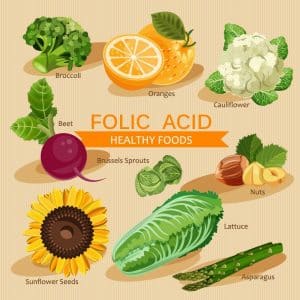
The Texas WIC program, an educational and nutritional resource for expecting mothers, outlines that folate (the natural form of folic acid) can be found naturally in foods such as:
- Broccoli,
- Asparagus
- Lima beans, dried beans, and peas
- Spinach and turnip greens
- Oranges, tangerines, and grapefruit
- Nuts and sunflower seeds
Some rice, pasta, bread, and breakfast cereals are also enriched with folic acid.
Getting enough folic acid is just one way a woman can help ensure she has a healthy pregnancy. Visit a Texas WIC clinic near you to see if you are eligible for the free program aimed at helping Texas mothers ensure they have a healthy pregnancy. You can find a clinic by visiting our location page. Mothers can shop for healthy foods any Lone Star Family Market, a Primarily WIC grocery store chain.

Explore Stages of Baby Feeding
Steps of Baby Feeding, 1-2-3
There are not many moments more rewarding than the first time you feed your baby. From the first feeding until they are throwing food on the floor in protest, your baby will go through several stages at mealtime. We have gathered pointers from experts, including WIC Texas, as a guide.
No stage is predictable; no child is the same. Every parent has to take cues from their child and their physician to determine the best feeding practices. There are a few certainties. One of them is your child will go through several stages of eating in the first year.
BREASTFEEDING 

Your first experience feeding your baby will likely be at the hospital. You will likely have help from trained professionals to advise and guide you about the best methods and techniques.
Every mom will have their own experience with breastfeeding. Some will nurse with ease for years. Others will have a harder time. Luckily there are free resources to help guide you along the way. We think one of the best resources is Texas WIC.
Experts at Texas WIC encourage mothers to breastfeed as long as possible. That’s because it’s both healthy for the baby and the mother. Texas WIC has created breastmilkcounts.com website that has everything you need to know about breastfeeding. There is even a hotline for WIC clients to call for breastfeeding support, 855-550-6667. To see if you are eligible to enroll, apply online or visit an Austin-area WIC clinic today.
FORMULA FEEDING
Even though breastfeeding is highly encouraged, not all moms are able to feed this way. Your little one still has to get nutrients to grow. Since babies are not allowed to try cow’s milk before age 1, formula is how your baby will get all the nutrition they need.
There are many baby formulas on the market, including speciality prescription formulas for babies that have allergies or digestive issues. Talk to your child’s doctor about which one is best. You may need to try a few to find the right one. Remember to follow the manufacturer’s mixing instructions. They are not all the same. Mixing them properly is very important for the safety of your baby. Texas WIC offers these guidelines for mixing formulas.
Texas WIC clients can pick up their baby formula at any Lone Star Family Market, a grocery store chain that offers primarily WIC foods. They carry a large selection of baby formula and even prescription baby formulas. You can find a list of products online. You can visit a location near you, or schedule a time for pickup. Staff is also very knowledgeable about the WIC program and can help answer your questions.
WIC BABY FOOD
This is where it really starts to get fun. Once your baby is ready (your baby’s doctor can confirm when your little one can start sampling), they will start exploring new tastes and textures. It’s just as much fun for parents to discover what their little ones like and don’t like.
Aren’t sure if your baby is ready to move to the next stage? Texas WIC provides an outline online to help you recognize important baby milestones and signs your tot might be ready.
Around 6-months old (confirm your child is ready with their doctor or a Texas WIC nutritionist), your baby may be able start trying purees. As they get older (around 9 months, but confirm with your doctor), they might be able to try foods that are soft and easily mashed. Scrambled eggs, soft fruits like bananas and avocados, steamed veggies or even homemade hummus.
Once your baby starts trying foods other than breastmilk and formula, you will need to be on the lookout for possible reactions from food allergies. Some of the common allergies are soy, fish, shellfish, eggs, dairy, wheat or nuts (peanut butter for example since babies should not eat whole nuts because they may choke). Texas WIC offers great guidelines on signs your baby has a food allergy.
It’s important to always watch your child while they eat in case they choke. Be prepared in the event they need help.
Guiding your baby through the various stages of eating will be a joy to watch. Enjoy the process!
TEXAS WIC & BABY FOOD
The WIC program is free for pregnant and breastfeeding mothers, and their children up to 5 years old. It’s designed for mothers to help their kids get a healthy start. WIC participants are able to take home free nutritional food, enroll in free nutritional classes and visit WIC-approved clinics. To find out if you qualify visit an Austin-area clinic near you or apply online.